7 Common Bookkeeping Mistakes Small Businesses Make and How to Avoid Them

Margaret Whitfield
9 May 2026
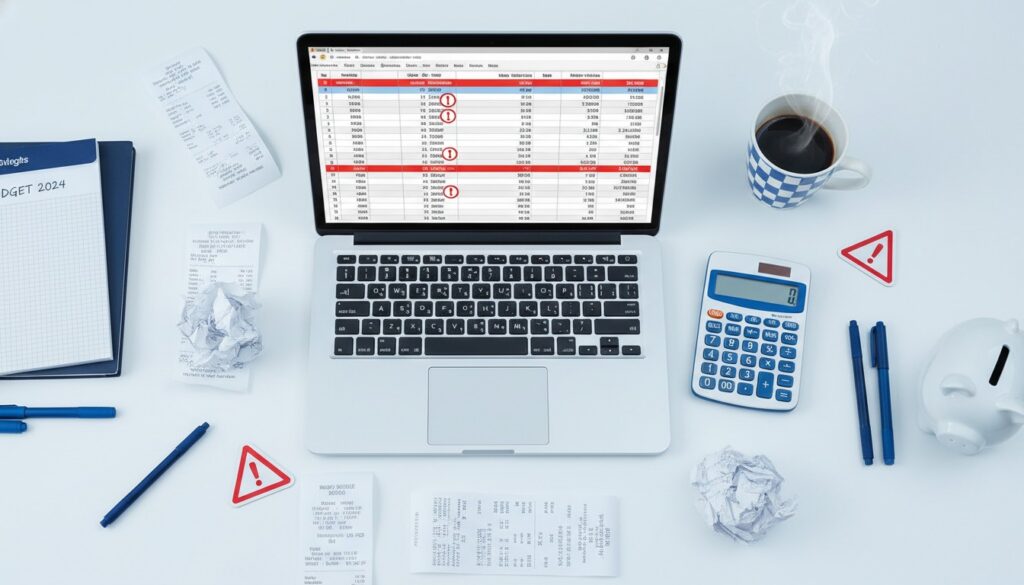
7 Common Bookkeeping Mistakes Small Businesses Make and How to Avoid Them
Even the most passionate and dedicated small business owners can stumble when it comes to managing their financial records. Bookkeeping might not be the most glamorous part of running a business, but it is undeniably one of the most critical. A single overlooked receipt, a misclassified expense, or a delayed reconciliation can snowball into serious financial headaches — from inaccurate tax filings to missed growth opportunities.
According to a study by SCORE, 82% of small businesses fail due to cash flow mismanagement, and poor bookkeeping is often at the root of that problem. The good news? Most bookkeeping mistakes are entirely preventable once you know what to look for.
In this comprehensive guide, we’ll walk through the seven most common bookkeeping mistakes that small businesses make and, more importantly, provide you with practical, actionable strategies to avoid each one. Whether you’re a solopreneur just starting out or a growing business with a small team, these insights will help you keep your finances clean, compliant, and ready for anything.
1. Mixing Personal and Business Finances
The Problem
This is arguably the number one bookkeeping sin committed by small business owners, especially sole proprietors and freelancers. Using a personal bank account or credit card for business transactions creates a tangled web that’s incredibly difficult to unravel come tax season.
When personal and business expenses are intermingled, it becomes nearly impossible to:
- Track actual business profitability
- Claim legitimate tax deductions with confidence
- Present clean records during an audit
- Secure business loans or attract investors
- Open a separate business checking account and route all business income and expenses through it.
- Get a business credit card for operational purchases, travel, and subscriptions.
- Pay yourself a salary or draw rather than dipping into business funds for personal expenses.
- Use accounting software like QuickBooks, Xero, or Wave to categorize every transaction automatically.
- Set up a detailed chart of accounts that reflects your specific business operations. Common categories include office supplies, marketing, travel, professional services, utilities, and insurance.
- Record expenses in real time. Don’t wait until the end of the month — or worse, the end of the year — to log receipts.
- Digitize your receipts using apps like Dext, Hubdoc, or even your phone’s camera. Paper receipts fade, get lost, and are difficult to organize.
- Review your expense categories quarterly to ensure they still make sense as your business evolves.
- Duplicate charges from vendors
- Unauthorized transactions or fraud
- Data entry errors in your accounting software
- Outstanding checks that haven’t cleared
- Bank fees you weren’t aware of
- Pull your bank statement for the previous month.
- Compare each transaction against your accounting records line by line.
- Investigate discrepancies immediately. Don’t let unresolved items pile up.
- Document adjustments and keep a reconciliation log for your records.
- Leverage automation. Most modern accounting platforms offer bank feed integrations that flag mismatches automatically.
- Incorrect journal entries that throw off your entire general ledger
- Misunderstanding of accrual vs. cash basis accounting
- Improper handling of payroll taxes, sales tax, and other compliance obligations
- Missed deadlines for tax filings and payments
- Invest in basic bookkeeping education. Free resources from the SBA, SCORE, and platforms like Coursera can give you a solid foundation.
- Use user-friendly accounting software designed for non-accountants. Tools like FreshBooks and Wave are built with small business owners in mind.
- Know your limits. Handle day-to-day transaction recording yourself, but hire a professional bookkeeper or accountant for monthly reviews, tax preparation, and complex transactions.
- Consider outsourcing. Virtual bookkeeping services have become incredibly affordable and can save you 10–20 hours per month.
- Not invoicing promptly after delivering goods or services
- Failing to follow up on overdue invoices
- Not tracking upcoming bills, leading to late payment fees and damaged vendor relationships
- Overlooking early payment discounts offered by suppliers
- Invoice immediately upon completion of work or delivery of products. The faster you invoice, the faster you get paid.
- Set clear payment terms (e.g., Net 15 or Net 30) and communicate them upfront.
- Automate payment reminders through your accounting software. Most platforms can send gentle nudges at 7, 14, and 30 days past due.
- Create an AP calendar that tracks all recurring bills, due dates, and early payment discount windows.
- Review your AR aging report weekly. This report shows you exactly which invoices are outstanding and for how long.
- Hardware failure (crashed hard drives, stolen laptops)
- Ransomware and cyberattacks
- Natural disasters (floods, fires, storms)
- Accidental deletion by employees
- Use cloud-based accounting software. Platforms like QuickBooks Online, Xero, and FreshBooks automatically store your data on secure, redundant servers.
- Implement the 3-2-1 backup rule: Keep 3 copies of your data, on 2 different types of media, with 1 copy stored offsite (or in the cloud).
- Schedule automatic backups daily or weekly, depending on your transaction volume.
- Test your backups periodically. A backup is only useful if you can actually restore from it.
- Restrict access to financial data to authorized personnel only, and use strong passwords with two-factor authentication.
- Inaccurate financial statements that don’t reflect reality
- Missed tax deductions because receipts are lost or forgotten
- Higher accounting fees when your CPA has to sort through a year’s worth of chaos
- Poor decision-making based on outdated or incomplete financial data
- Increased audit risk due to inconsistencies and gaps in records
- Block dedicated time each week — even just 30 minutes — for bookkeeping tasks. Treat it like any other non-negotiable business appointment.
- Batch similar tasks together. For example, categorize all expenses on Monday, send invoices on Tuesday, and reconcile accounts on Friday.
- Automate wherever possible. Set up bank feeds, recurring invoices, and automatic expense categorization rules.
- Create a bookkeeping checklist with daily, weekly, monthly, quarterly, and annual tasks so nothing falls through the cracks.
- Reward yourself. Seriously — if bookkeeping feels like a chore, pair it with something you enjoy. Put on your favorite podcast, grab a great cup of coffee, and make it a ritual rather than a burden.
- Review financial reports monthly. Your Profit & Loss Statement, Balance Sheet, and Cash Flow Statement are the three pillars of financial insight. Know them, read them, and act on them.
- Stay current on tax law changes. Tax codes evolve every year. What was deductible last year may not be this year, and vice versa.
- Communicate with your accountant regularly — not just at tax time. A good accountant is a strategic advisor, not just a number cruncher.
- Document your bookkeeping processes. If you or your bookkeeper were suddenly unavailable, could someone else step in? Written procedures ensure continuity.
How to Avoid It
Pro Tip: Open a dedicated business bank account and obtain a business credit card from day one — even if your business is small.
Here are the steps to create a clear financial boundary:
2. Failing to Track and Categorize Expenses Properly
The Problem
Many small business owners either neglect to record expenses altogether or dump them into vague, catch-all categories like “miscellaneous” or “general expenses.” This creates two major issues: you lose visibility into where your money is actually going, and you risk missing valuable tax deductions.
The IRS requires that deductions be ordinary and necessary for your type of business. Without proper categorization, you can’t substantiate your claims, and you might be leaving thousands of dollars on the table.
How to Avoid It
Remember: A well-organized expense tracking system doesn’t just save you money on taxes — it gives you the data you need to make smarter business decisions every day.
3. Neglecting Regular Bank Reconciliations
The Problem
Bank reconciliation is the process of comparing your internal financial records against your bank statements to ensure everything matches. It sounds simple, but a surprising number of small businesses skip this step — or only do it once a year during tax preparation.
Without regular reconciliations, you may miss:
How to Avoid It
Make bank reconciliation a monthly ritual — ideally within the first week after each month closes. Here’s a simple process:
4. DIY Bookkeeping Without Adequate Knowledge
The Problem
In an effort to save money, many small business owners attempt to handle all bookkeeping themselves — even when they lack foundational accounting knowledge. While the entrepreneurial spirit is admirable, this approach often leads to:
How to Avoid It
“The bitterness of poor quality remains long after the sweetness of low price is forgotten.” — Benjamin Franklin
Don’t let penny-wise bookkeeping become pound-foolish financial management.
5. Ignoring Accounts Receivable and Accounts Payable
The Problem
Cash flow is the lifeblood of any small business, and mismanaging accounts receivable (AR) and accounts payable (AP) is one of the fastest ways to choke it off.
Common mistakes include:
How to Avoid It
6. Not Backing Up Financial Data
The Problem
Imagine losing every single financial record your business has ever created. No transaction history, no invoices, no tax documents, no payroll records. For businesses that rely on a single computer, a local hard drive, or even paper files, this nightmare scenario is more common than you’d think.
Data loss can result from:
How to Avoid It
Don’t wait for disaster to strike. A robust backup strategy costs almost nothing compared to the devastating cost of data loss.
7. Procrastinating on Bookkeeping Tasks
The Problem
Perhaps the most insidious mistake of all is simply putting off bookkeeping until it becomes an overwhelming mountain of receipts, invoices, and bank statements. This procrastination typically peaks right before tax deadlines, leading to rushed, error-prone record-keeping and maximum stress.
The consequences of bookkeeping procrastination include:
How to Avoid It
Bonus Tips for Bookkeeping Success
Beyond avoiding the seven mistakes above, here are a few additional strategies to elevate your financial management:
Conclusion
Bookkeeping mistakes are common, but they are far from inevitable. By understanding the seven pitfalls outlined in this guide — mixing personal and business finances, poor expense tracking, skipping reconciliations, DIY without knowledge, neglecting AR/AP, failing to back up data, and procrastinating — you can take proactive steps to protect your business’s financial health.
The businesses that thrive aren’t necessarily the ones with the most revenue. They’re the ones with the clearest financial visibility, the strongest systems, and the discipline to maintain them. Clean books lead to better decisions, lower tax bills, smoother audits, and ultimately, a more profitable and sustainable business.
Take Action Today
Don’t wait until tax season to get your books in order. Start today by identifying which of these seven mistakes applies to your business and take one concrete step to fix it this week.
Need help getting started? Consider booking a consultation with a professional bookkeeper, exploring cloud-based accounting software, or downloading a free bookkeeping checklist to keep yourself on track.
Your future self — and your bottom line — will thank you.
Written by James Wilson | Bookkeeping Tips